
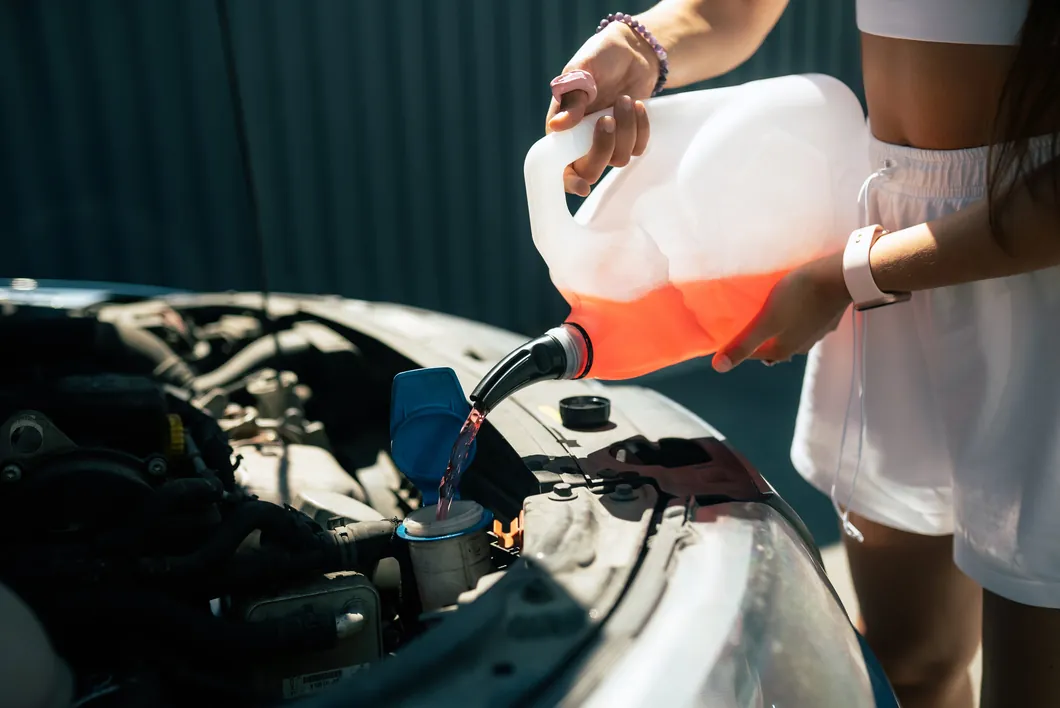
Have you ever wondered how a car's cooling system works? Read on to find out.
Engine oil works directly in the engine, lubricating and protecting its parts and also helping to control temperature. But it is the cooling system that keeps the engine from overheating and hurting the vehicle's performance. When the cooling system works at the right temperature, the engine lasts longer, with less wear and friction, better fuel economy and less maintenance, as well as better performance and lower emissions.
Usually, water is put into the cooling system and circulates through it, exchanging heat with the engine to keep it from overheating. At first, until the engine reaches its normal operating temperature, this fluid circulates only through the engine's passages. Once the engine reaches its operating temperature (85 to 95 degrees), the fluid starts flowing through the whole cooling system and passes through the radiator, which, together with the fan, cools the engine.
Water, which many drivers choose to fill the radiator, does not have the same properties as coolant, which, for example, boils only above 100 °C. Impurities in water, such as sulfates, chlorides and bicarbonates, tend to speed up corrosion in the system, and corrosion can puncture or clog the radiator. Water also contains other impurities, such as calcium and magnesium carbonates, which reduce heat exchange by forming scale, usually at hot spots, and help clog the radiator.
That can lead the engine to overheat and seize.
Among other functions, radiator fluids raise the boiling point of water (from 100 to about 128 degrees, on average) and, at the other extreme, lower its freezing point (if water freezes in the radiator or hoses, it can crack them). They also protect the system against corrosion and rust, reduce deposits that hinder cooling by preventing salts from settling, and protect and lubricate system components such as the water pump.
These additives, also known as coolants, protect the whole cooling system against corrosion caused by water. To do so, a package of anti-corrosion additives must be part of their composition. They are usually made from a monoethylene glycol base combined with additives that perform the functions described above.
Want to learn more about the automotive world? Follow us on social media!